Oregano: it grows wild on dry slopes, but you keep buying it in a packet
Wild oregano grows on its own across the dry slopes of the Balkans and the Mediterranean. It's been there forever.
And we go to the store and buy oregano in a plastic packet, imported, who knows how many months old.
It doesn't make sense. Especially when you know oregano is one of the easiest plants to grow, both in a pot on a balcony and in a garden. Plant it once, it comes back on its own every year.
Oregano isn't just for pizza
Pizza is what made oregano world-famous. But limiting it to pizza is like having a Ferrari and only driving it to the corner shop.
Where oregano really shines:
Tomato in any form:
Sauce, bruschetta, caprese. Oregano and tomato are a chemical reaction that always works.
Grill marinades:
A mix of oregano, garlic, lemon juice, and olive oil is a standard Mediterranean marinade for chicken and fish.
Greek food:
Horiatiki salad, souvlaki, tzatziki. Oregano is hard to replace here. Don't swap it for basil.
Roasted vegetables:
Zucchini, peppers, eggplant, tomato in the oven. A sprig of oregano in the pan, a few drops of oil.
Oil infusion:
Olive oil with dried oregano, garlic, and chili. Sits for a week, then use it on toast, salad, or pasta.
Tea:
Less known, but oregano tea is great for respiratory issues, cough, and sore throat. Same use as wild thyme.
Wild vs cultivated oregano: what's the difference
Wild oregano (Origanum vulgare):
Grows on its own here. Aromatic, strong taste, small leaves. This is what people gather in the mountains and dry for winter.
Greek oregano (Origanum vulgare subsp. hirtum):
A cultivated variety, stronger than the wild one. This is what goes on pizza and into Mediterranean cooking. The leaves are fuzzy and lighter in color.
Mexican oregano (Lippia graveolens):
A totally different plant, related to the citrus family. Used in Mexican cooking, almost unknown here.
For growing at home, we recommend Greek oregano if you want a strong kitchen herb, or local wild oregano if you want toughness and a milder taste.
How to grow oregano at home
Oregano is more adapted to local conditions than any other Mediterranean herb, because it grows here naturally. That means it doesn't need much from you.
Light
It loves sun: at least 6 hours. The more sun, the more aromatic. In partial shade it grows, but the leaves are less fragrant. A south or west window indoors, or an open balcony.
Watering
Drier is better. Oregano comes from dry, rocky terrain and is used to drought. Water deeply, then wait until the soil is fully dry. In summer, once a week. In winter, once every two to three weeks or less.
Overwatering means yellow leaves, soft stems, dead plant. If you're not sure, skip it.
Soil
Well-draining, poor soil. Oregano tastes better in less rich soil. Stress activates the essential oils. Standard soil with 30 to 40 percent sand or perlite. Rich soil means lots of growth, less smell.
Pot
Medium to larger. Oregano spreads and likes room. Terracotta is ideal because it pulls out excess moisture. A drainage hole is required.
Growing in the garden
Oregano in the garden takes almost no work. Plant it in a sunny, dry spot. Don't fertilize, don't water except in heavy droughts. Once a year, cut the plant back to a third of its height.
It's a perennial: comes back every year. Over the years it spreads and gets fuller. Plant it once, and you have it forever.
Overwintering
In the garden it overwinters with no protection (wild oregano grows up in the mountains, so a cold winter is no problem). In a pot on a balcony: same, no protection needed. Indoors: it grows slower, but doesn't go dormant.
Harvesting and drying
When to harvest:
The best time is just before flowering. That's when the essential oils are most concentrated and the taste is strongest. Usually June or July. But you can pick all season.
How to harvest:
Cut the top third of the sprigs. Never leave a bare stem. Always leave a few pairs of leaves so the plant can keep growing.
Drying:
Oregano is one of the herbs that doesn't lose much smell when dried, unlike basil. Tie in bundles, hang upside down in a dark, airy spot for one to two weeks. Or spread it on paper.
Dried oregano in a closed jar lasts a year and stays aromatic.
Freezing:
Wash, dry, freeze on a tray, then store in a bag. Use straight from the freezer, don't thaw.
Oregano oil
Olive oil with oregano is the foundation of Mediterranean cooking, and you make it in 5 minutes of active work:
- Put dry oregano sprigs in a sterilized glass bottle
- Add a clove of garlic (optional) and a few peppercorns
- Pour olive oil to the top
- Close, leave in a dark spot for one to two weeks
Use it for toast, salad, marinade, pizza dough. Keeps up to three months at room temperature, longer in the fridge.
Where to find seed or a seedling
Oregano seed is sold at every garden center. Seedlings show up at nurseries and markets in spring.
An alternative: in fall, at mountain markets and from village vendors, dry wild oregano they picked themselves. Not for growing, but great for the kitchen.
FAQ
Can garden oregano overwinter in a pot?
Yes, no problem. Even if the top dies back, the root survives and the plant comes back in spring.
Why doesn't my oregano smell?
Soil too rich, or not enough sun. Move it to a sunnier spot and stop fertilizing. Stress activates the essential oils.
Can I sow oregano from seed?
Yes, but germination is slow and unreliable (two to four weeks). Easier to buy a seedling or take a cutting from another plant.
How much oregano do I need for a season?
One mature plant gives more than the average family uses in a year. You can dry the surplus for winter.
Oregano and wild thyme look similar, how do I tell them apart?
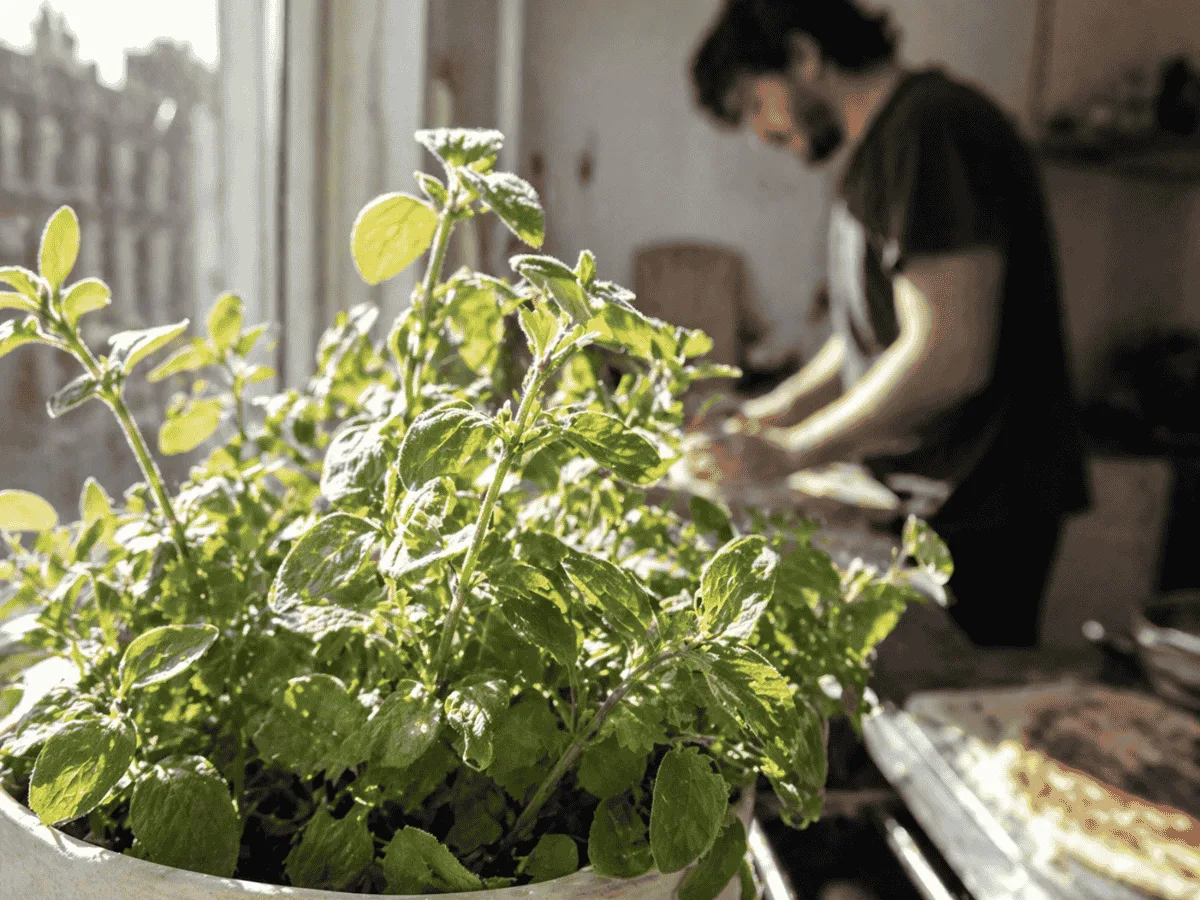
The smell. Crush a leaf between your fingers. Oregano is intensely resinous and spicy. Wild thyme is finer, less intense. By eye: oregano has wider, softer leaves.