Thyme: the herb that does its work quietly
Thyme isn't the star of a dish. Nobody says "wow, this smells like thyme" the way they do with basil or rosemary. But take it out of a recipe and you immediately feel something is missing.
That's thyme. It works in the background, builds depth of flavor, ties the other herbs together. Chefs call it the workhorse of the kitchen, and there's a reason.
It's also one of the easiest herbs to grow at home: tough, long-lived, low-maintenance.
Why thyme belongs in every kitchen
Meat dishes
Thyme and meat are a pairing that's never gone out of style. Goes with:
- Chicken: in a marinade, under the skin before roasting, in soup
- Lamb: a classic combination, especially with garlic and lemon
- Pork: in a rub for the grill or in a pan with butter
- Fish: surprisingly good, especially with salmon and sea bass
Soups and stews
Chicken soup without thyme is possible, but incomplete. Fresh or dried, thyme gives soup that "homemade" note that's hard to describe but easy to recognize. In a bouquet garni (a small bundle of thyme, parsley, and bay) it's the base of every good stock.
Vegetables
Roasted potatoes, carrots, zucchini, tomatoes: all better with thyme. Drop a sprig in the pan before the oven. Done.
Sauces
Pasta sauce, tomato sauce, béchamel with thyme: a herb that goes in early and cooks long, releasing its smell slowly.
Thyme and health
Before it was a kitchen herb, thyme was a medicine. And it's not just tradition. There's evidence:
Thymol:
the active compound in thyme has proven antibacterial and antiviral effects. It's used in Listerine and many throat medicines.
Thyme tea:
A sprig in boiling water, 5 to 7 minutes. Helps with cough, sore throat, and colds. With honey, an effective natural fix that grandmothers have known for a long time.
Thyme syrup:
Make a stronger tea, add honey 1:1 once it cools. Keeps in the fridge for up to a month. A teaspoon as needed.
How to grow thyme at home
Thyme is a Mediterranean plant, related to rosemary and lavender in what it needs. It likes dry and sunny, and that's exactly why it's easy to grow indoors.
Light
At least 4 to 6 hours of direct sun. More tolerant than rosemary: an east window is fine. But more light means denser, more aromatic growth.
Watering
Like rosemary: the soil has to dry out fully between waterings. Thyme handles drought better than damp. Water once a week, less in winter. Finger in the soil: if it's dry an inch or two down, water. If there's still moisture, wait.
Soil
Well-draining, sandy. Standard soil with 30 to 40 percent sand or perlite. A pot with a drainage hole is required. Thyme in wet soil rots fast.
Pruning
Regular cutting is what keeps thyme compact and full. After flowering, cut back the top third. During the season, pick sprigs as needed. That pushes branching.
When thyme gets too woody and bare at the base, it's time for a new plant. Usually every two to three years.
Overwintering
Thyme is very cold-hardy and handles frost. On a balcony it overwinters with no protection in most climates. Indoors: slower in winter, but it doesn't go fully dormant.
Fresh vs dried thyme: when to use which
Unlike basil, which loses almost everything when dried, thyme keeps a good part of its smell. That's why dried thyme from the store is an acceptable option, but fresh is still better.
Use fresh:
For short-cooked dishes (salads, marinade, finishing a dish)
Use dried:
For long-cooked dishes (sauce, stew, oven roasts)
Ratio: 1 teaspoon dried equals 3 teaspoons fresh (fresh is less concentrated).
Drying thyme at home
Thyme dries easily and fast:
- Cut sprigs in the morning, after the dew has dried
- Wash and gently pat dry with a paper towel
- Tie in small bundles
- Hang upside down in a dark, airy spot
- Fully dry in one to two weeks
Store in a glass jar away from light and heat. Lasts up to a year.
Alternative: a food dehydrator on the lowest setting, two to three hours. Faster, but less smell.
Thyme and rosemary: perfect neighbors
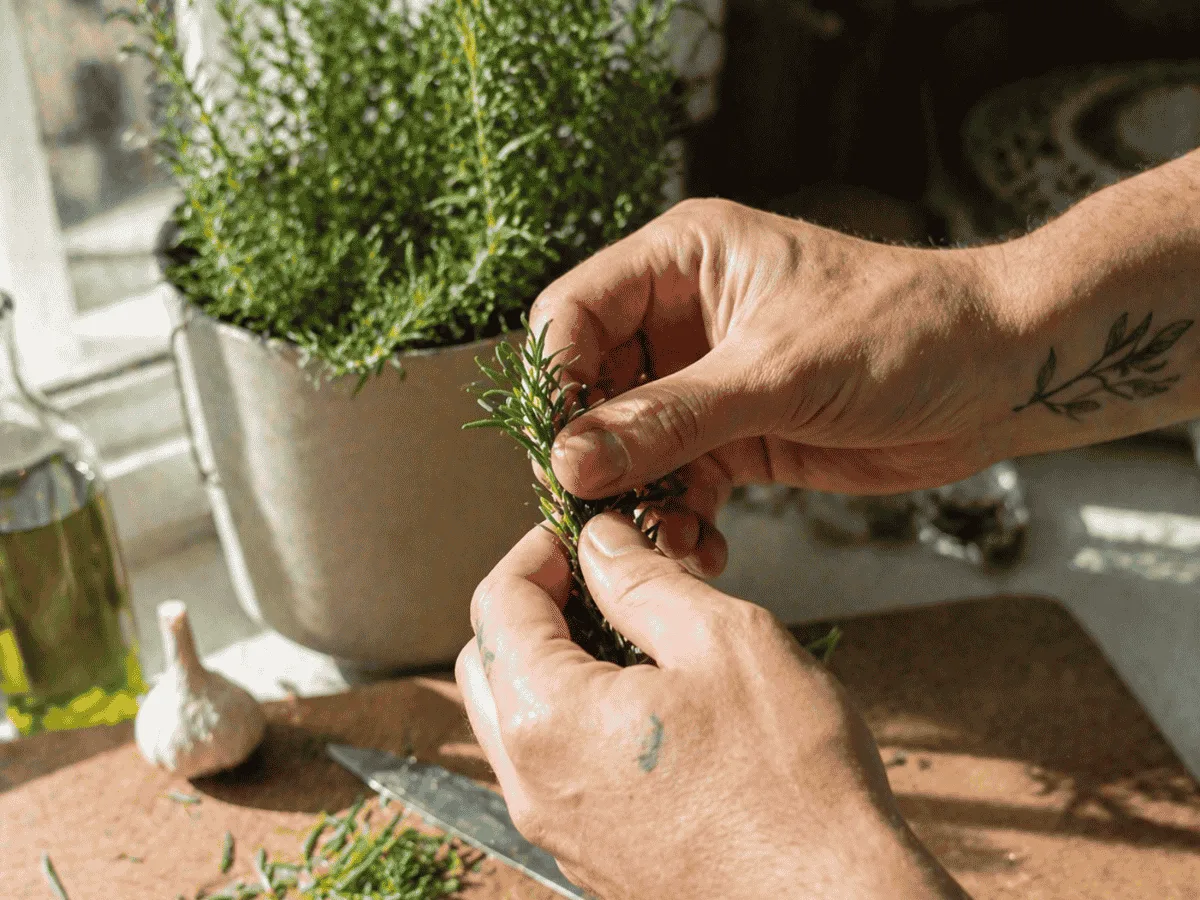
Both plants want the same things: dry, sun, well-draining soil. They can sit next to each other on the same window or balcony and share the same watering routine.
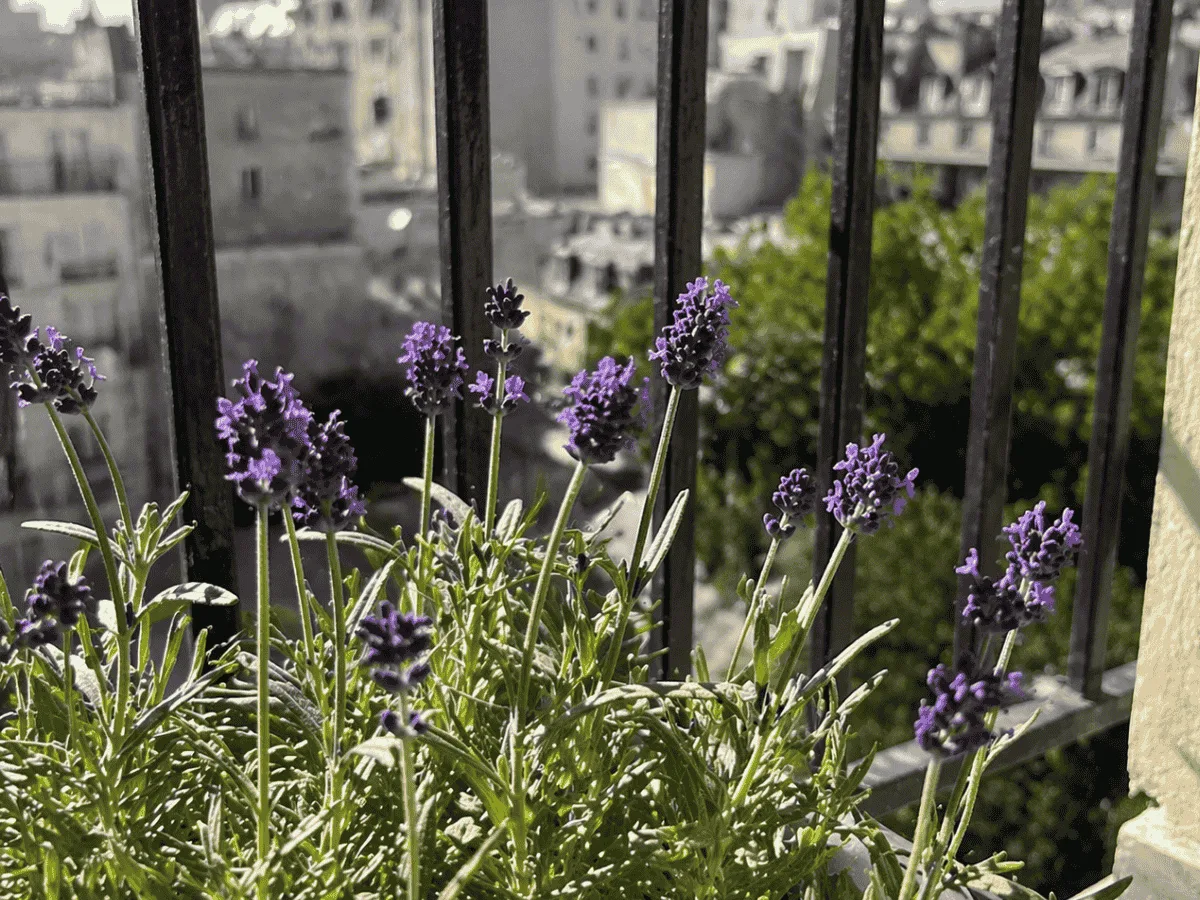
With lavender — a Mediterranean trio that's grown the same way and looks great together.
FAQ
How long does thyme live?
A perennial: it can last 3 to 5 years. When it gets too woody, replace it or grow a new one from a cutting.
Can I grow thyme from a cutting?
Yes. Cut a sprig 3 to 4 inches long, strip the bottom leaves, put it in water or straight into damp soil. Roots in two to three weeks.
Why is my thyme losing its smell?
Most often: not enough sun, or the plant is getting old. Thyme gets more aromatic when it's a little stressed: dry soil, lots of sun.
How many sprigs do I need for one soup?
Two or three fresh sprigs. Add at the start of cooking, remove before serving if the stems are thick.
Can thyme grow indoors without a balcony?
Yes, with a good south-facing window. Slower than outdoors, but enough for kitchen use.