Parsley: the herb that's in almost every recipe
Is there a soup without parsley? A stew? A roast? A bean dish? Grilled meat? A simple salad?
Parsley isn't a herb that comes and goes with trends. It's a constant: always there, always fresh, always needed.
And we always buy it at the store. A small bunch wrapped in plastic that turns yellow in the fridge after two days.
There's a better way.
Flat-leaf parsley: why it's the better choice
There are two kinds of parsley you'll come across:
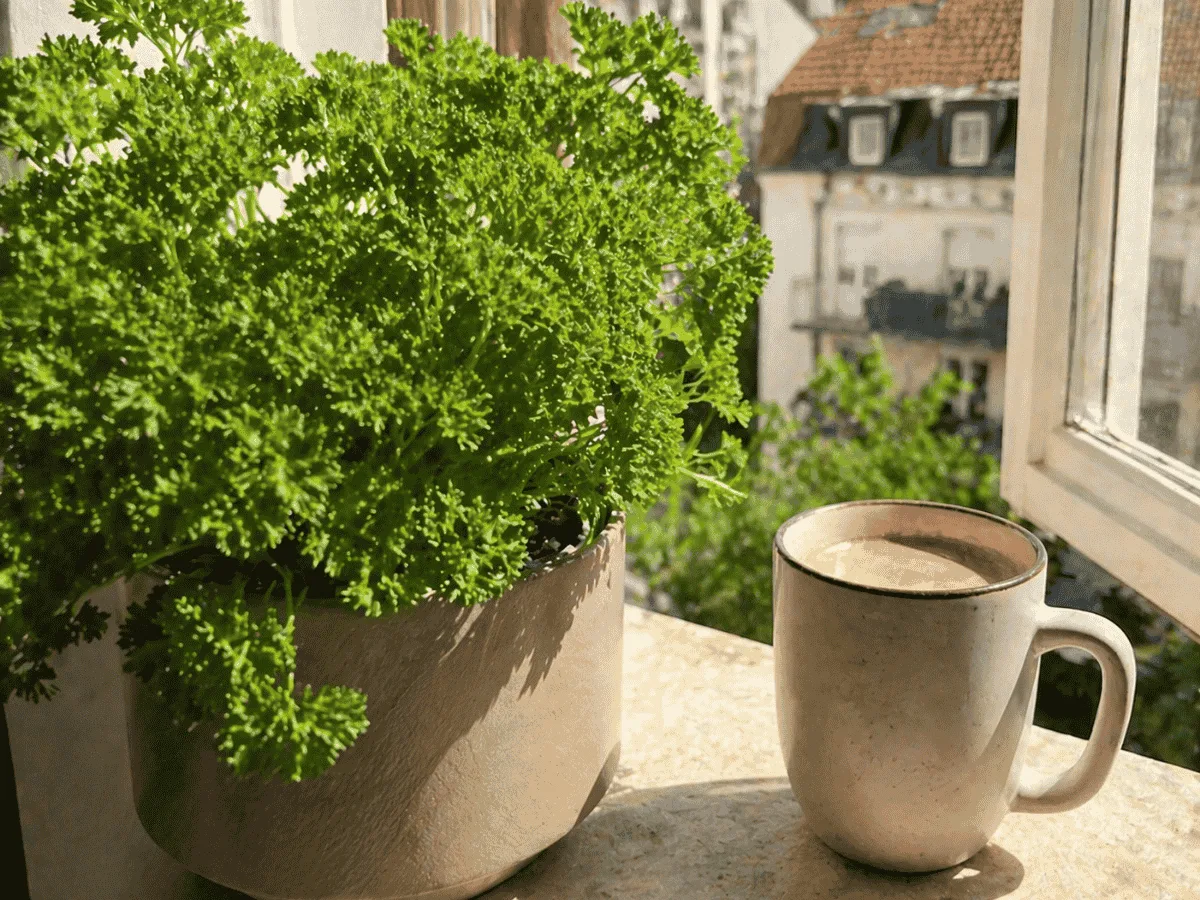
Curly parsley:
The one with crinkly, decorative leaves. Mostly used as a garnish on a plate. The taste is mild, almost grassy. Few people actually like it as a flavoring.
Flat-leaf (Italian) parsley:
Flat, smooth leaves, deep green. Stronger, richer, the real parsley taste you know from soups and stews. This is what chefs use, and what people grew in their gardens for generations.
Our recommendation: only grow flat-leaf parsley.
The taste is on a different level, it grows fuller, and gives you more leaf to harvest. Curly parsley looks pretty, but you want flavor, not decoration.
Parsley in the kitchen
There's almost no recipe that doesn't call for it. But there are uses you lose when you reach for dried or old parsley:
Soup and stew:
Added in two places: the root at the start of cooking (to flavor the stock), the leaves at the end (so they stay fresh and green).
Meat:
On roasted or grilled meat, finely chopped with garlic and lemon zest. Classic gremolata that lifts any dish.
Salads:
Tabbouleh (the Levantine bulgur salad) is 50 percent parsley. Or simply: tomato, onion, parsley, oil, salt.
Grill sauce:
Chimichurri is Argentinian, but once you try it, you don't go back to ketchup. Parsley, garlic, chili, vinegar, oil. Five minutes of work.
Beans, lentils, chickpeas:
Fresh parsley at the end of cooking lifts the whole dish.
How to grow parsley at home
Parsley has a reputation for being stubborn, and somewhat earned. It germinates slowly, and for the first weeks it looks like nothing's happening. But once it gets going, the harvest is heavy and lasts for months.
Light
Tolerates partial shade better than most herbs. An east or west window is ideal. On a north window it grows, but slowly. Strong direct midday sun in summer can burn it out.
Watering
This is the key difference from Mediterranean herbs: parsley likes steady moisture. The soil should never fully dry out. Lightly damp at all times, but not wet, not waterlogged.
Water every other day in summer, less often in winter. Finger in the soil: if it's dry an inch down, water.
Soil
Rich, well-draining soil. Unlike rosemary and oregano, parsley likes a nutrient-rich substrate. Standard vegetable or herb soil, no need to add sand.
Sowing from seed
Parsley is sown direct. It doesn't like being transplanted, because it has a long, sensitive root.
Trick for faster germination:
Parsley seeds have a coating that slows germination. Soak them in lukewarm water for 12 to 24 hours before sowing. They sprout in 14 to 21 days instead of three to four weeks.
Sow five or six seeds per pot, about half an inch deep. When they come up, thin to two or three plants.
Temperature
Likes mild warmth: 15 to 22°C is ideal. It tolerates light frost, but below -5°C it suffers. Indoors: fine all year.
Harvesting
Always pick the outer leaves. The inner ones are younger and keep growing. Never take more than a third of the plant at a time.
Parsley that gets picked regularly grows fuller. Leave it untouched for a month, and it slows down.
Parsley in the Urbi smart garden: a great match
Parsley is one of the plants that does especially well in hydroponic growing. The reasons are practical:
Faster growth:
Hydroponics gives roots direct access to nutrients, no searching through soil. Parsley that takes three weeks to germinate in a pot germinates in 10 to 14 days in the Urbi smart garden.
Fuller leaves:
More nutrients mean more leaf. Same space, bigger harvest.
No drying-out problems:
The system regulates moisture automatically. Parsley never runs out of water, which is a common issue in pots.
All year:
LED lighting solves the short winter day problem, when parsley in a pot slows down or stops.
Flat-leaf parsley in the Urbi smart garden is one of our favorite combinations: fast, full, flavorful.
Storing fresh parsley
Fresh parsley lasts longer than you think, if you store it right:
Method 1, like cut flowers:
Put the bunch in a glass with a little water, cover with a plastic bag, keep in the fridge. Lasts two to three weeks.
Method 2, in a damp towel:
Wrap in a damp paper towel, put in a bag, fridge. Lasts one to two weeks.
Freezing:
Wash, dry, chop fine, freeze in a bag or in ice cubes with water. Straight from the freezer into soup or sauce: perfect.
Drying:
Possible, but parsley loses about 80 percent of its smell when dried. Freezing is a far better option.
Parsley root: don't throw it away
Parsley root is just as important in many cuisines as the leaves, and a lot of people forget it when growing the plant.
The root flavors soup and stock. One parsley root in the pot equals the base of a good broth.
If you grow parsley in a pot, after 6 to 8 months you can dig up the root, use it for soup, and plant a new one. Nothing wasted.
FAQ
Why is my parsley flowering?
Parsley is a biennial: in the second year it flowers and goes to seed. That's the natural cycle. Once it flowers, the leaves get smaller and bitter. Time for a new plant.
Can I grow parsley from seed, or only from a seedling?
Both work. From seed is cheaper but slower. A seedling from a nursery gives you a harvest faster.
Why is my parsley turning yellow?
Most often: not enough water, or not enough light. Check both.
How many plants do I need for regular use?
For a family that cooks every day: two or three plants in rotation. One always in full harvest, one growing.
Is the parsley root from a pot edible?
Yes, fully. Same root as the one you buy separately. A bit smaller, but the same taste.