Orchids: not hard, just cared for the wrong way
Orchids are the most popular houseplant in the world. And probably the most often killed.
Not because they're demanding, but because everything you instinctively do with plants is wrong for an orchid. Soil? It doesn't want any. Regular watering? That kills it. Direct sun? It burns.
Once you understand how an orchid actually lives in the wild, everything clicks. From that point on, your orchids stop dying.
How orchids live in the wild, and why that's everything
Orchids don't grow in soil. They grow on trees, attached to the bark, high up in the canopy of a tropical rainforest.
Their roots are exposed to the air, wrapped in moss and bits of bark. Rain soaks them now and then, and they dry out completely before the next rain. They never sit in water. They are never in dense, wet soil.
That's everything you need to know about orchid care. Everything we do should mimic those conditions.
A clear pot: not for looks, it's a need
Orchids come in clear plastic pots for a reason: orchid roots photosynthesize. The green roots exposed to light actively help feed the plant.
Never put an orchid straight into an opaque ceramic pot. If the look bothers you, slip the clear pot inside a decorative one.
A clear pot also tells you when to water. The roots are silver-gray when they're dry, green when they're soaked. Wait until they turn silver. That's when you water.
Watering: once a week is too much
The most common mistake: watering on a schedule. Once a week, every week. The orchid starts to rot.
The rule:
Look at the roots, not the calendar.
Silver, dry roots: water. Green, wet roots: wait.
How to water:
Place the pot in a bigger container of room-temperature water. Let it sit for 15 to 20 minutes so the roots soak up water from below. Take it out, let it drain completely, then put it back in its spot.
Never leave an orchid sitting in water. Never water from the top, straight into the center of the plant. Water that gets between the leaves rots the heart of the plant.
In summer: about once every 7 to 10 days. In winter: once every two to three weeks.
Light: bright, but no direct sun
An orchid in the canopy gets a lot of light, but it's filtered through leaves. Bright indirect light.
Ideal:
An east- or west-facing window: morning or afternoon sun, no harsh midday sun.
Direct midday sun:
The leaves get yellow or brown spots from burning.
Too little light:
The plant survives, but it won't bloom. If your orchid never blooms, the most common reason is not enough light.
Test:
The leaves should be light green. Dark green leaves mean too little light. Yellow or reddish leaves mean too much sun.
Temperature and air
Orchids like a difference between day and night temperatures. That temperature swing triggers blooming.
Day:
20 to 25°C. Night: 15 to 18°C.
In summer, an open window at night is a natural fix. In fall, an orchid near a window where night temperatures drop is ideal for triggering a bloom.
Don't put an orchid:
- Near a radiator (dries out the air and the roots)
- In a cold draft (leaves go black below 10°C)
- Near fruit (the ethylene that fruit gives off makes the flowers age faster)
Substrate: bark, not soil
Orchids don't grow in soil. They grow in a mix of bark, moss, and perlite. That mix lets air and water through fast and doesn't hold moisture.
Standard houseplant soil = certain death for an orchid.
You buy orchid mix separately at any garden center. Replace it every one to two years, because the bark breaks down and gets dense.
What to do when an orchid finishes blooming
During the bloom:
Don't move the plant. Don't change anything. Just normal care, and enjoy.
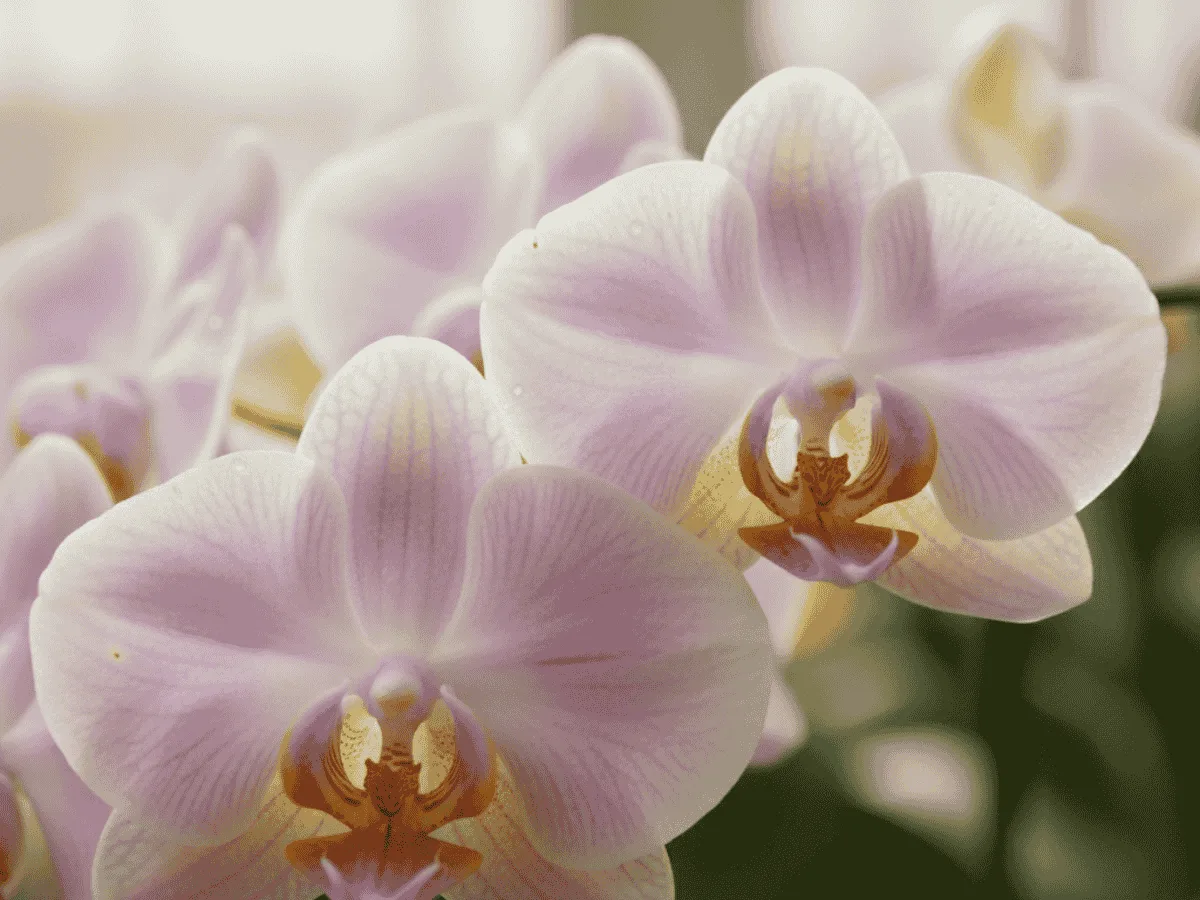
A bloom lasts two to four months. Phalaenopsis (moth orchid, the most common type) blooms longer than almost any other houseplant.
When the flowers fall off:
Don't throw the plant away. That's mistake number one. The flower stem isn't done.
Option 1: cut the stem all the way down to the base. The plant puts its energy into roots and new leaves. Next bloom in 6 to 12 months.
Option 2: cut just above a node on the stem. A new branch with flowers can grow from that node. A faster new bloom, but the flowers are usually smaller.
If the stem turns yellow or brown, cut it down to the base without thinking twice.
How to make an orchid bloom again
This is the question everyone asks. The answer: temperature swing plus patience.
The process:
- In fall or early winter, move the orchid near a window where night temperatures are 15 to 18°C
- Cut back on watering: once every two to three weeks
- Keep feeding with a special orchid fertilizer (NPK with more phosphorus)
- Wait four to eight weeks
When a new green stem starts growing from the base or from the old stem, blooming has started. From the first stem to the first flowers, it takes two to three months.
Don't panic if nothing happens for months. The orchid is storing energy. As long as it has green leaves and healthy roots, it's alive and getting ready.
Feeding
Once every two weeks during growth and bloom: a fertilizer made for orchids (lower nitrogen, more phosphorus and potassium).
A rule that orchid growers love: "weakly weekly." A weak dose, but on a regular schedule. Half the recommended dose, once a week, in the watering water.
In winter, once a month, or stop entirely if the plant is dormant.
Aerial roots growing out of the pot
Normal. Don't cut them, and don't push them back in. They're healthy roots looking for moisture from the air.
If your home has dry air (winter heating), mist the aerial roots with water once a week.
Common mistakes: quick list
- Watering on a schedule: look at the roots
- Water in the center of the plant: always from below, by soaking
- Opaque pot: roots need light
- Soil instead of orchid mix: certain death
- Throwing it out after the bloom: mistake, the plant is alive and can bloom again
- Direct sun: leaf burns
- Next to a radiator: dry roots, dry heart of the plant
FAQ
How long does an orchid bloom?
Phalaenopsis blooms for two to four months. Some plants longer, in ideal conditions.
Can an orchid bloom twice a year?
Yes. With the fall temperature swing and good care, some plants bloom twice a year.
My orchid has yellow leaves, what does that mean?
A lower, older leaf turning yellow and falling off is normal. Several yellow leaves at once means too much water or direct sun.
Can I keep orchids in an office?
Yes, but only if there's enough indirect light. Dark windowless offices, no. Near a window, great, and the bloom draws attention.
Phalaenopsis and moth orchid, same thing?
Yes. Phalaenopsis is called the moth orchid because of the shape of the flowers. The most common type in stores, and the easiest to grow at home.