ZZ plant: the plant that survives everything you do to it
There's a test the ZZ plant passes every time.
Forget to water it for a month — it survives. Stick it in a hallway with no windows — it survives. The heating dries the air, the AC blows on it, no one's touched it in three months — it survives.
Zamioculcas zamiifolia. The name sounds complicated, the plant is anything but. It comes from the dry regions of East Africa, where rain is unpredictable, the sun is strong, and the ground is rocky. To survive that, the ZZ plant developed a system that makes it almost unkillable in a home or an office.
Understand the system, and you'll never kill a ZZ plant again.
How the ZZ plant stores water, and why it matters
Under the soil, the ZZ plant has thick, potato-like roots called rhizomes. They're water and nutrient reservoirs.
When there's no rain for months, the plant lives off those reserves. The above-ground part can dry out completely; the plant isn't dead. As soon as rain comes, new growth pushes up from the rhizomes.
In a home, that means watering once a month is plenty. Sometimes less.
Visual cue:
when ZZ plant leaves start turning yellow, it's usually a sign of too much water, not too little. The opposite of what you'd think, but true.
Watering: the less, the better
This is the only rule you need to remember:
Water deeply, then wait until the soil is completely dry, to the bottom of the pot. Then water again.
In summer: once every two to three weeks. In winter: once a month, sometimes less.
If you're not sure, don't water. The ZZ plant forgives drought. It doesn't forgive moisture.
Yellow leaves = too much water. Remove the yellow leaves, let the soil dry out, water less often. The plant will recover.
Light: the myth to break
The ZZ plant often gets sold as a "plant for dark rooms." That's half right.
The ZZ plant tolerates low light better than almost any other houseplant. But that doesn't mean it loves it. In good indirect light, it grows faster, the leaves are glossier, and the plant gets fuller.
In a dark hallway, it survives, but it grows slowly. Maybe two or three new leaves a year.
Direct strong sun:
Avoid it. The leaves can get brown burn spots.
The ideal spot: near a window with indirect light. It can also sit farther from the window; just expect slower growth.
Soil and pot
Well-draining soil, like for succulents and cacti. A mix of standard soil with 30 to 40 percent sand or perlite. Water needs to flow through fast.
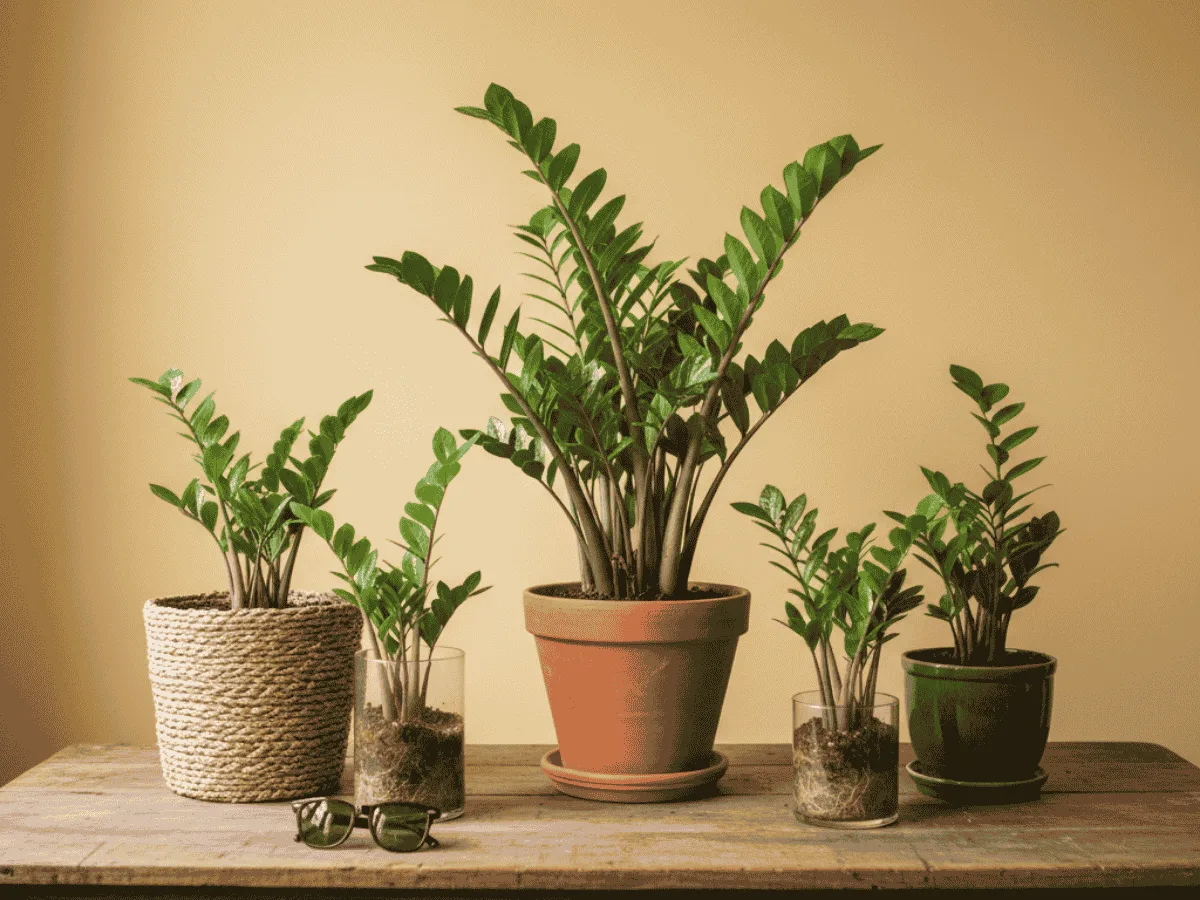
A pot with a drainage hole, no exceptions. Empty the saucer right away. The ZZ plant must not sit in water.
Don't pick a pot that's too big. The ZZ plant likes to be a little "snug." A pot that's too big means too much wet soil around the roots.
Repotting: patience is the key
The ZZ plant grows slowly. Repotting is needed rarely: every two to three years, or when you see roots coming out of the drainage hole.
Always repot in spring. Use a well-draining mix, and don't pick a pot much bigger than the old one. One size up is enough.
When you repot, don't be surprised by the rhizomes. Firm, round, white or cream tubers are a healthy sign. Soft, dark, smelly tubers mean rot. Cut them out with a clean knife and dust the cuts with charcoal.
It's toxic, but not dramatically
The ZZ plant is toxic to people and pets if eaten. Contact with the sap can irritate skin and eyes.
In practice, that means:
- Don't put it within reach of small children or pets that chew on plants
- Wash your hands after handling, especially when repotting
- Don't rub your eyes while working with the plant
That's it. It's not exotically dangerous. Just don't eat it.
ZZ plant in the office: why it's our first pick
When clients ask "which plant should I put in the office," the ZZ plant is almost always first on the list.
The reasons are practical.
Weekends and holidays:
The office sits empty, no one waters. The ZZ plant doesn't notice.
AC:
Dries out the air, blows on the plant. The ZZ plant doesn't care.
Low light:
Inner offices, hallways, meeting rooms. The ZZ plant works.
Looks:
Dark green, glossy leaves look expensive and healthy. Always impressive, with no effort.
One ZZ plant in a reception area or a meeting room says "we pay attention to detail," and asks for no attention in return.
Plants and greenery for your office and workspace
Propagation: slow but possible
The ZZ plant propagates two ways.
By dividing the rhizomes:
When you repot, if there are several tubers, cut a piece with at least one rhizome and plant it on its own. The fastest way.
From a leaf:
Break off a healthy leaf with the stem, plant it in damp sand or perlite. In 6 to 9 months, a small rhizome forms. Slow, but fascinating.
Wiping the leaves
The ZZ plant's glossy leaves attract dust like a magnet. A dusty ZZ plant looks less shiny and has a harder time photosynthesizing.
Once a month: wipe each leaf with a damp cloth. You can add a few drops of lukewarm milk to the water: natural shine, no chemical products.
FAQ
My ZZ plant isn't growing, why?
Normal. The ZZ plant is naturally slow. In good conditions, two to four new leaves a month during the growing season. In low light, maybe five or six leaves a year. Not a problem if it looks healthy.
The leaves are glossy but have brown spots, why?
Direct sun, cold drafts, or physical damage. Move it away from direct sun and the AC.
Can a ZZ plant live with no natural light at all?
It can survive under artificial light (LED or fluorescent), but that's not ideal long-term. Some natural light, even indirect, is better.
My ZZ plant has yellow leaves at the bottom, is that a problem?
Lower, older leaves naturally turn yellow and fall off. If only the bottom ones are yellow, it's normal. If whole young leaves are turning yellow, that's too much water.
How long does a ZZ plant live?
Decades, with minimal care. Plants 20 years old or more are common.