Coriander: some people love it, others can't stand it. Both are right.
Scientists figured out why. There's a gene called OR6A2 that makes coriander taste like soap to some people. It's not about taste or habit. It's literally genetic.
If you're on the team that loves it, you have one of the most useful herbs in the world and you should grow it at home. If you're on the team that can't stand it, you've probably already closed this page.
For everyone still here: let's talk about coriander.
Why coriander deserves a spot on your windowsill
Coriander is the herb that defines whole cuisines. Without it, you don't really have:
- Mexican food: salsa, guacamole, tacos. Fresh coriander goes in at the end, raw.
- Indian food: curry, dal, chutney. Both the leaves and the seeds are core ingredients.
- Middle Eastern food: falafel, shawarma, hummus. Coriander is hard to replace.
- Thai and Vietnamese food: pho, pad thai, tom kha. Fresh, plenty of it.
- Balkan cooking: less traditional, but more and more common in modern recipes.
The gap between fresh and dried coriander is even bigger than with basil. Dried coriander leaf has barely half the smell of fresh. If you've only used dried, fresh will surprise you.
Coriander vs cilantro: same plant, two names
This confuses a lot of people. Coriander and cilantro are the same plant: Coriandrum sativum.
Coriander usually means the seed: dried, ground, used as a spice in powder or whole in cooking.
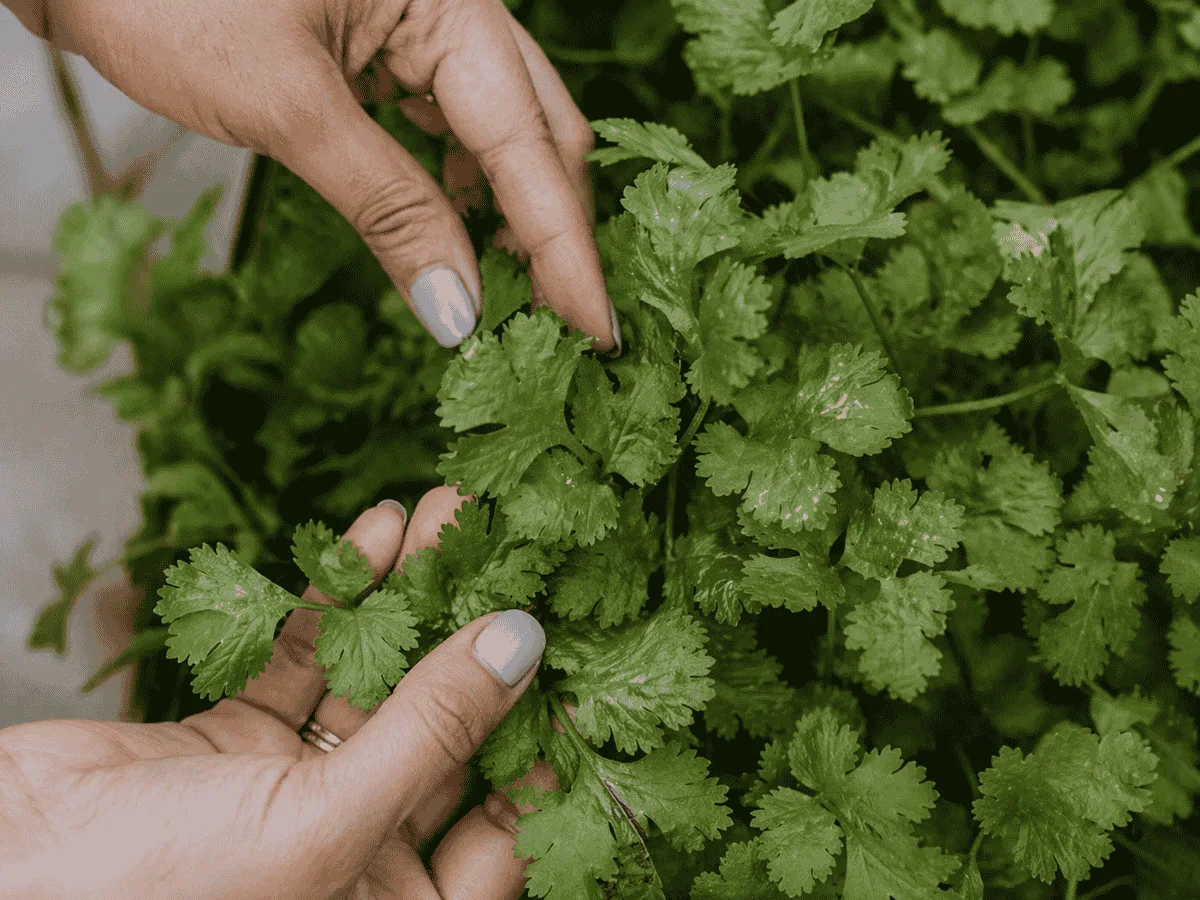
Cilantro is the word most English speakers use for the fresh leaves of the same plant.
So when a recipe says "cilantro," you take the fresh leaves from the plant. When it says "coriander," it usually means the seed or the powder. Same plant, different parts, different uses, different flavors.
The seed has a warm, citrus taste. The leaves are fresh, intense, polarizing.
How to grow coriander at home
Coriander is moody. It grows fast, but it also bolts fast. It goes to flower and seed before you've even started picking leaves. Once you understand what it wants, it's easy to manage.
Light
Coriander likes bright light, but not strong direct midday sun in summer (that pushes it to flower). An east-facing window or one with indirect light is ideal. In summer with strong sun, move it back from the window.
Temperature
This is the key one:
Coriander doesn't like heat. Above 25°C it bolts and goes to seed fast. Spring and fall conditions are ideal: 15 to 22°C. In winter on a warm windowsill it's fine. In summer it's a challenge.
Watering
Steady and moderate. The soil should stay lightly damp, not wet. Dry soil pushes it to flower sooner.
Sow direct, don't transplant
Coriander doesn't like being transplanted. It has a deep root that's easy to damage. Sow seeds straight into the final pot. Drop in four or five seeds, cover with about half an inch of soil, water gently.
It sprouts in 7 to 14 days. Once the seedlings come up, thin them down to two or three plants per pot.
Successive sowing: the only way to keep a steady supply
Each coriander plant gives you a harvest for three to four weeks, then it bolts. The fix: sow a new pot every three weeks. You always have one ready to harvest, one growing, one just sown.
It sounds like a lot, but it isn't. It becomes a routine.
When coriander flowers, don't throw it out
When you see coriander sending up a thin stalk and producing small white flowers, it's moved into the seed phase. The leaves get smaller and lose some of their smell.
But that's not the end:
The flowers are edible and have a mild flavor. Great as a garnish on salads and cold dishes.
The green seeds that form after the flowers have an intense, fresh taste, different from dried seed. Great in salsa and chutney.
The dried seed:
Let the plant dry out fully, collect the seed, store in a jar. You have homemade spice for the year. Or sow it for the next cycle.
Coriander seeds in the kitchen
While the leaves are polarizing, the seed is softer and more accepted, even by people who don't like fresh coriander.
Whole seed:
Toast it dry in a pan for a minute or two until it smells warm, then grind or use whole. Great in curry, marinades, bread.
Ground:
Add toward the end of cooking. It loses smell fast, so it's better to grind as needed than use old pre-ground.
Pairings:
Coriander goes well with cumin, turmeric, cinnamon, and chili. It's the base of ras el hanout and garam masala.
FAQ
Why does coriander taste like soap to me?
The OR6A2 gene, a genetic trait. About 10 to 15 percent of people have this version. It's not a habit and it can't be changed.
Can I grow coriander indoors all year?
Hard in summer because of the heat. Ideal for spring and fall. In winter, possible with good light and a cool window.
How fast does coriander grow from seed?
Sprouts in 7 to 14 days, first harvest in three to four weeks. One of the faster herbs.
Can I use seeds from the spice aisle to plant?
Coriander seed from the spice section sometimes sprouts, but it's unreliable, since it's often heat-treated. Better to buy seed from a garden center or online.
How many pots do I need for regular use?
If you cook Mexican or Asian food often, at least three pots in rotation.