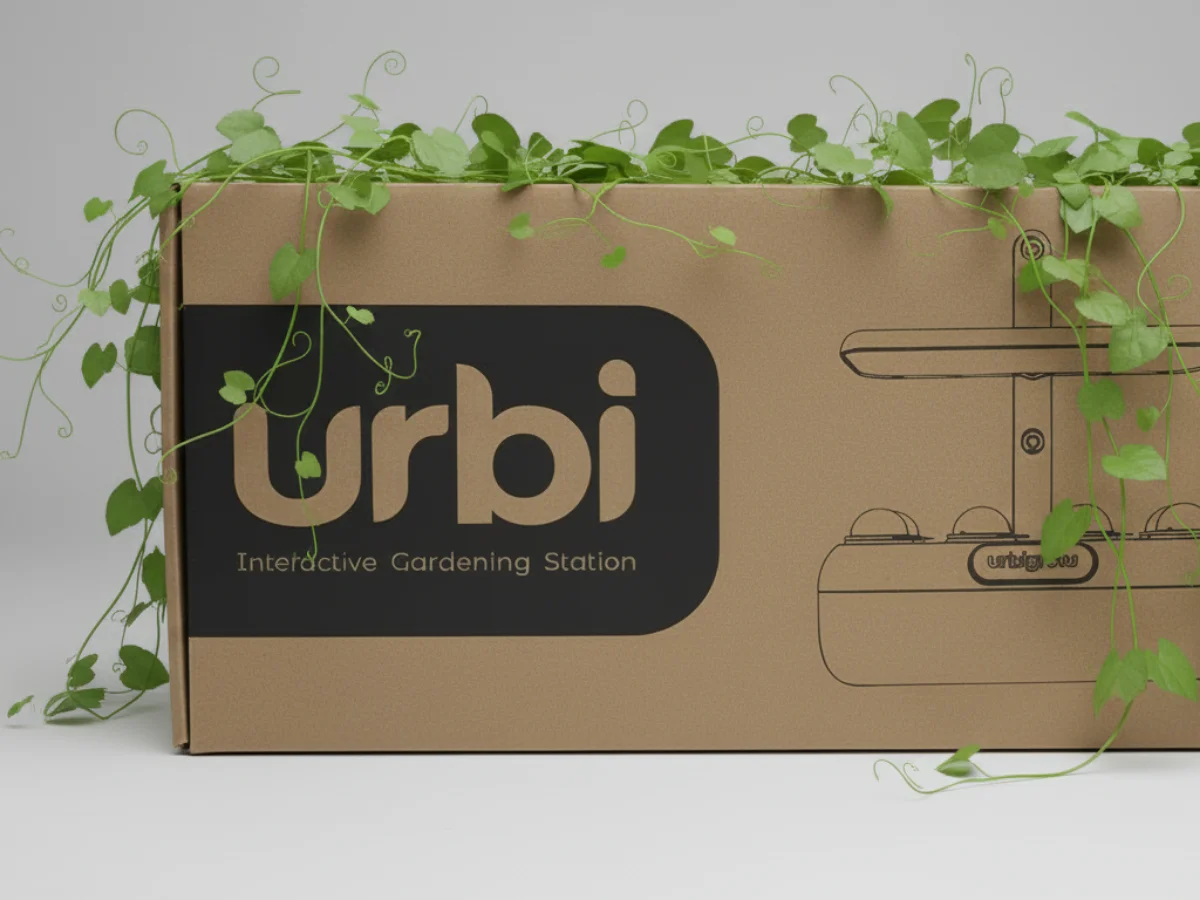
Urbi smart garden - user experiences
From basil and cherry tomatoes to rare spruces and even bonsai grown in an apartment.
Hello! 👋 We know you're here because you want to hear what other people think about the Urbi smart garden. So this won't be one of those purely flattering company posts. We've done our best to stay objective and, based on feedback from real users, give you a clear picture of what you can expect from your Urbi.
Our goal is not to sell the product to just anyone, but to put it in the hands of people who actually want it. 🌱 So before you read on, two important things to share.
Who is the Urbi smart garden for?
Urbi is a good fit for you if:
🌆 You live in the city
You're someone who values both nature and new technology, and you want fresh organic bites right in your apartment, always within reach. Or you want to bring life into your space with greenery, without buying fake plants or potted ones that need lots of care, light, watering, and skill. In other words, a lot of your free time.
🎁 You're looking for that perfect gift
For yourself or for someone you love. A gift you can't buy just anywhere and that not everyone has (yet). A gift that grows all year round, literally, and brings a smile almost every day.
Urbi is probably not for you if:
👨🌾 You have a farm, a big garden, or a greenhouse where you already grow your own vegetables, fruit, and herbs every day.
🌶️ You count how many kilos of peppers you can harvest
Urbi wasn't built to replace a greenhouse. It's there to let you grow something fresh, beautiful, and your own, right inside your home.
For a start, a small part of what you usually buy at the store you can now replace with an organic version you grow yourself.
The focus isn't on kilos. It's on quality, taste, and a small daily ritual of urban gardening.
❌ You don't believe in the "smart home" concept
If the idea of a smart garden, an app, and notifications sounds like the start of the apocalypse, we're probably not a match.
Now let's get to the point
Today, more than 3,000 people are successfully growing their favorite edible and decorative plants in the Urbi smart garden. Some bought Urbi for their apartment, kitchen, or living room. Others received it as a gift. What's certain is that Urbi leaves a strong first impression and a lot of joy.
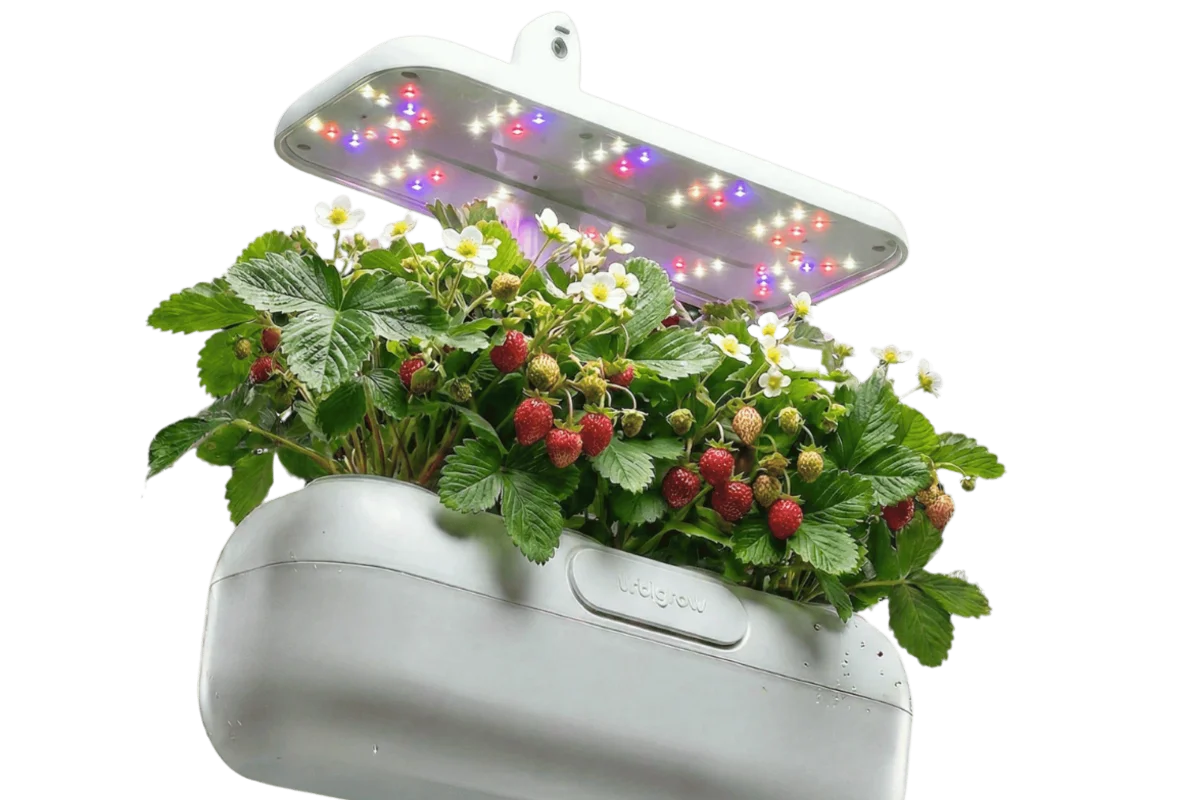
Plants in Urbi grow from seed, inside specially designed capsules with bio-substrates.
Urbi has 8 planting spots and comes with 8 substrates. One substrate goes in each spot, and you can plant more than one seed in a single substrate, depending on the plant.
You can plant basil, lettuce, chili pepper, and flower seeds that come in the pack, or other seeds of your choice.
Urbi isn't tied only to our seeds. It actually gives you the conditions to experiment with many other plants.
The only rule is that the seed should not be larger than 3 cm in diameter (so an avocado pit, for example, won't be a great fit).
As for the substrates, they're used in place of soil and get replaced after each completed growth cycle (roughly every 2 to 4 months).
New substrate sets are easy to order on our site. The price is affordable and each set includes 8 new substrates plus seeds of your choice.
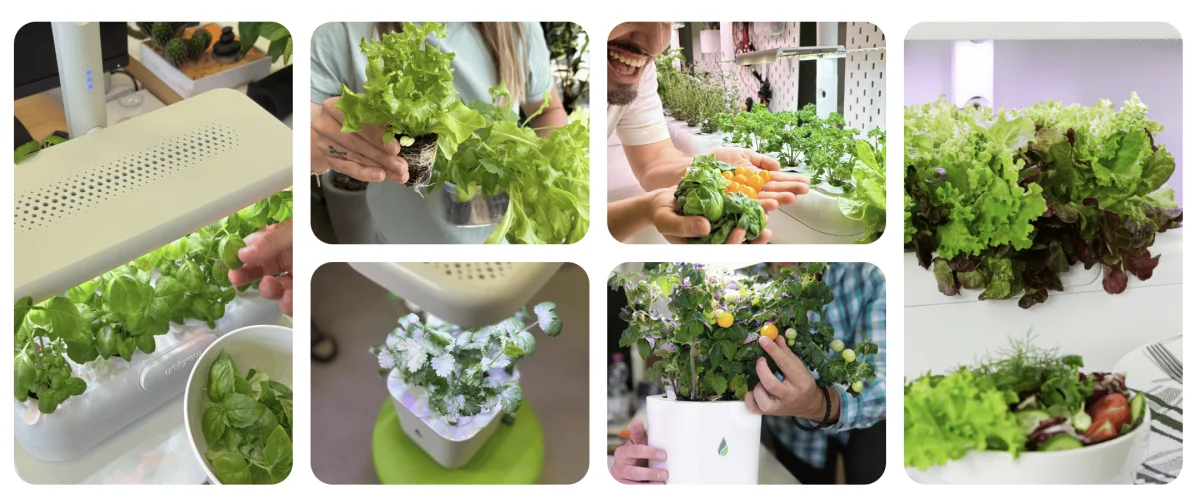
The plants in Urbi sync with the Urbi app, which guides you step by step from seed to harvest.
In the app, you pick the plants you want to grow, and Urbi will let you know when they need water, how to care for them ✂️, and how to pollinate them.
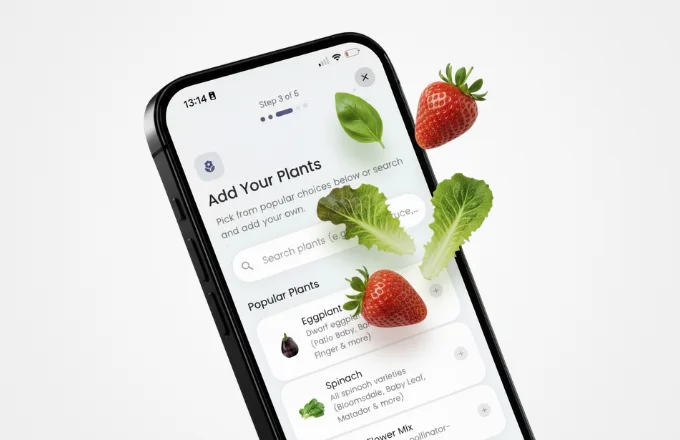
The app translates the "language" of your favorite plants into simple instructions. You know exactly what they need and when.
You can set when Urbi turns its light on, switch on Do Not Disturb mode (pick a window when you don't want the light to come on), track your plants, and share what you're growing with other users.
✨ Experiences with mini vegetables and fruit
Dwarf cherry tomato 🍅 is the clear favorite among vegetables. You get 20 to 70 juicy fruits in a single cycle (about 3 months), and the app teaches you how to care for the plant and pollinate it.
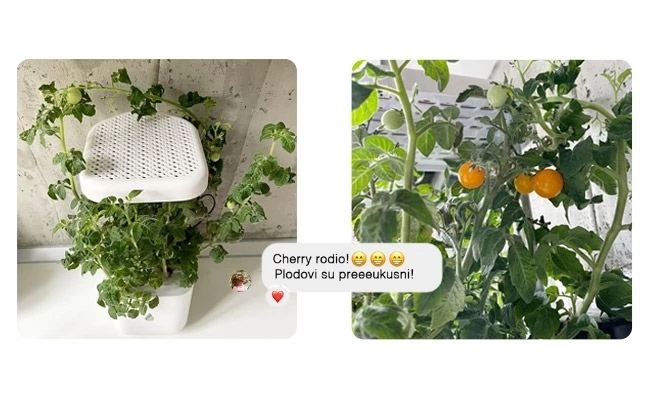
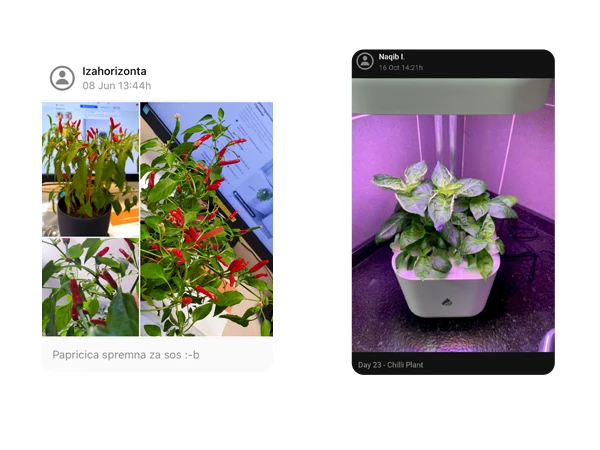
Dwarf chili peppers 🌶️, arugula 🥬, and lettuce grow very fast in Urbi. You can mix arugula and lettuce and start eating them after just a month. Chili takes about four months.
Wild strawberries
The substrate set with wild strawberry seeds was our best-selling product of spring 2026.
Wild strawberries need a lot of patience. Much more than herbs or leafy greens.
Germination is slow. After 3 to 4 weeks you see tiny strawberry plants, then things pick up and the first flowers appear after two months.
The berries that come are exceptionally tasty and sweet. We noticed that kids especially loved watching the whole process, from seed to fruit.
🌱 Experimental substrates
Experimental Urbi substrates come without seeds, so you can add your own.
Some of the most interesting plants users have tried are the Adenium bonsai and the Serbian spruce (Picea omorika), followed by pineapple, Arabica coffee, and papaya.
All of these plants, and especially the Serbian spruce, are quite demanding. In a regular pot they can take up to a year just to germinate, and until now it was nearly impossible to grow them from seed indoors.
Even though Urbi creates great conditions for most plants, honestly, we didn't expect the Serbian spruce to take to it this well.
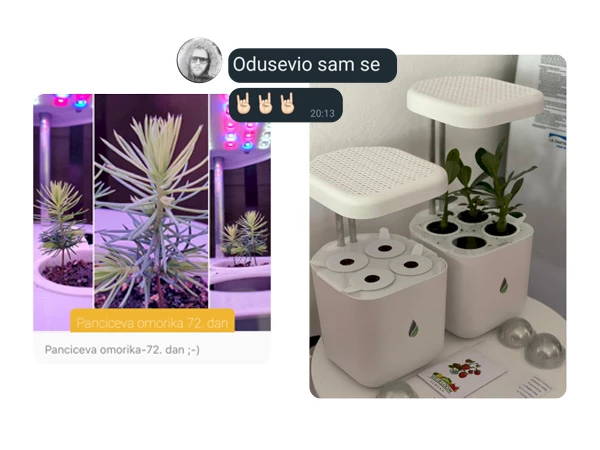
Experimenting sparks creativity in our users and stretches what the product can do. And to help your experiment go well, our team is here for any kind of support and questions.
🌿 What happens when nature has other plans?
Sometimes a white, velvety fungus shows up on the surface of a substrate, or a seed simply doesn't germinate.
That's nothing strange. The same thing can happen with regular soil in a pot.
If white fungus appears, it's usually harmless and doesn't bother the plants.
You just remove it from the surface in a few simple steps. The app tells you exactly what to do.
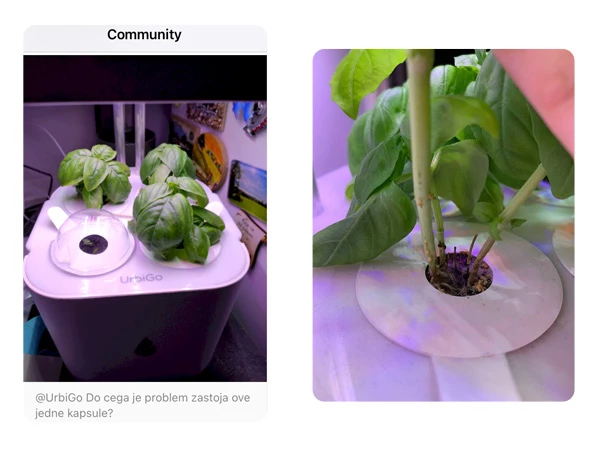
And if a seed doesn't sprout? It doesn't mean you did something wrong.
Seed germination can vary, even when conditions are good. Some seeds start fast, some slow, and some never come up at all.
That's part of the natural growing process. It's not a user mistake or a device problem. It's just natural selection.
To wrap up
OK, we know this post was long. We hope it wasn't boring.
There are plenty of nicely designed pots with grow lights on the market, but Urbi is the first smart home device built for urban gardening. We made it to fit the climate and conditions of city life, and to bring the many benefits of urban gardening closer to people today.
Wi-Fi and a phone unlock Urbi's full feature set (growth tracking, notifications, app control). Even without Wi-Fi, Urbi keeps running in a smart offline mode and gives plants enough light, just without the app features. It's not the right choice for someone who thinks urban gardening is just "a pot, a seed, and a window."
Urbi connects two worlds, the technological and the natural. Sometimes nature takes matters into its own hands, but we're here to keep learning from it and improving the product.
Only together can we create a positive change in urban life and prove that a technological future can definitely also be a green one.
That's it for now. If you have a question or any doubts, feel free to write to us at info@urbigrow.com or on Instagram.
Frequently Asked Questions
What can I grow in the Urbi smart garden?
Basil, chili, cherry tomatoes, arugula, lettuce, and other herbs and culinary plants. With experimental substrates, users have successfully grown bonsai, Serbian spruce, and trees from seeds of their own choice.
How many substrates come in the Urbi starter pack?
Eight substrates, with Basil Genovese seeds by default, which is ideal for beginners.
Does Urbi work without Wi-Fi?
Yes. Without a Wi-Fi connection, Urbi switches to a smart offline mode and automatically runs the lights for 12 hours from the moment the device is plugged in, so plants get enough light to grow even without internet. Wi-Fi and the app add features like growth-cycle tracking and notifications.
What happens if seeds in the substrates don't germinate?
If seeds in a purchased set don't germinate, we'll ship you a new set of substrates on us.
What's the difference between standard and experimental substrates?
Standard substrates come with pre-selected seeds (basil, tomato, lettuce, chili). Experimental substrates ship without seeds, so you can plant seeds of your own choice.
How long is one growth cycle in Urbi?
It depends on the plant. Basil, arugula, and lettuce are ready to harvest in about a month, while cherry tomatoes and chili peppers take around three months.
What if white mold appears on a substrate?
The occasional white mold is a harmless airborne fungus. You remove it in a few steps following the instructions in the Urbi app, and it doesn't harm the plants.
